Each autumn, the apples growing in the St Edmund’s orchard provide us with a wonderful reminder of our connection to the land and to the generations who have lived, worked and studied here before us.
For more than ten years, collecting the apples has formed part of the St Edmund’s Award. Rather than allowing the fruit to go to waste, pupils help to harvest the apples from our own grounds. They are then taken locally to be pressed and transformed into delicious apple juice, allowing us quite literally to enjoy the fruits of our land.
There is something particularly special about continuing this tradition at St Edmund’s. Historically, the community would have sown, grown and harvested food on the College grounds, making use of the land to help provide for those who lived here. Indeed, the site on which Butler Hall now stands was once a vegetable patch.
Although St Edmund’s has changed considerably over the years, our orchard gives us the opportunity to maintain a small but meaningful connection with that past.
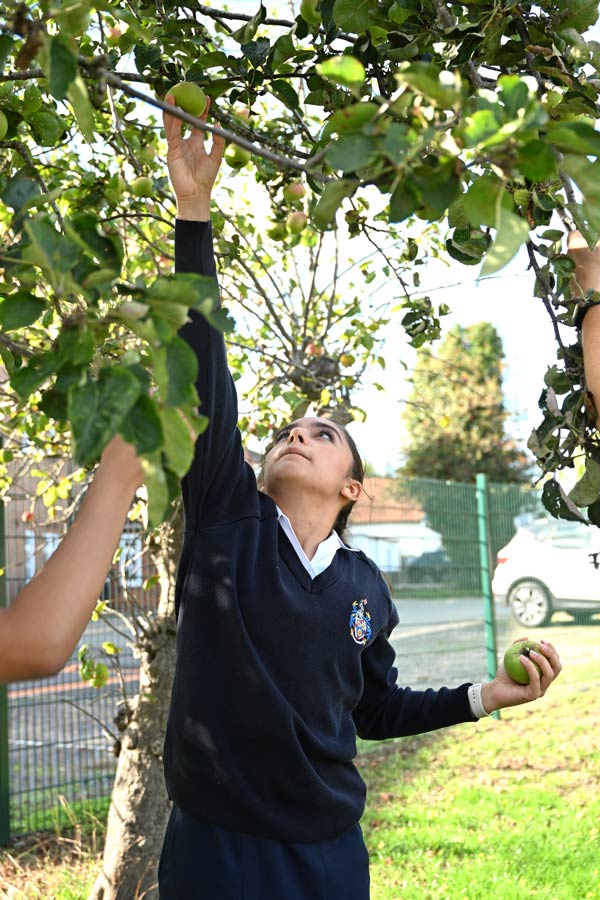
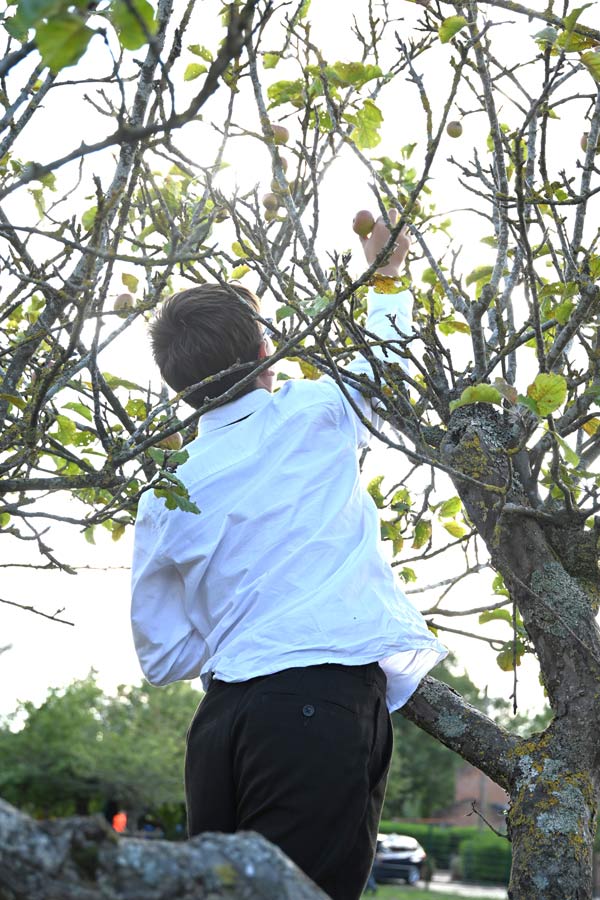
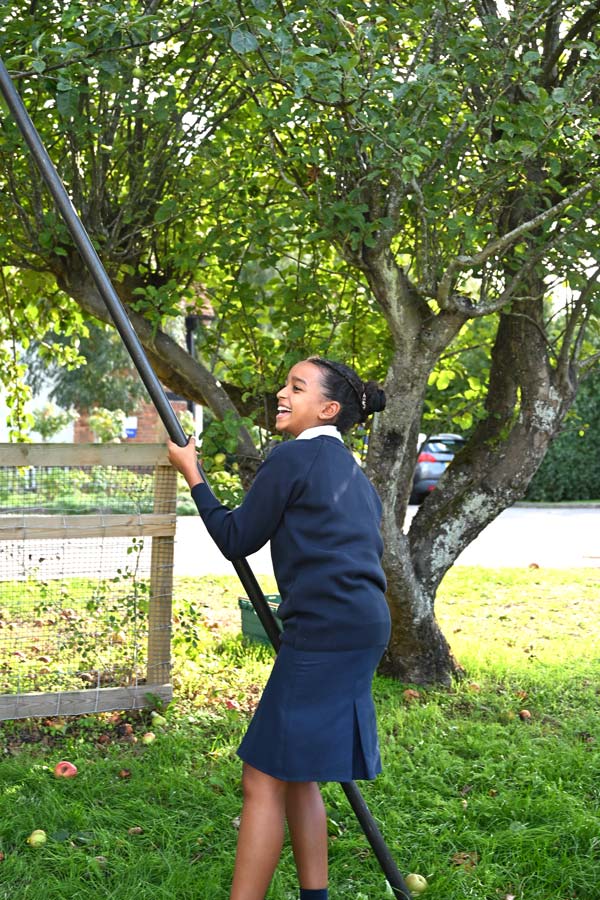
The annual apple harvest also carries an important message for our pupils. It encourages us to think about where our food comes from, to value the natural resources around us and to recognise the importance of using what we grow rather than wasting it. From picking an apple from a tree to seeing it return as a bottle of juice, pupils can experience the complete journey from harvest to finished product.
Most importantly, the project represents something very St Edmund’s: community, stewardship and tradition. The trees growing in our grounds provide fruit, our pupils help to harvest it, and a local producer turns that fruit into something the whole community can enjoy.
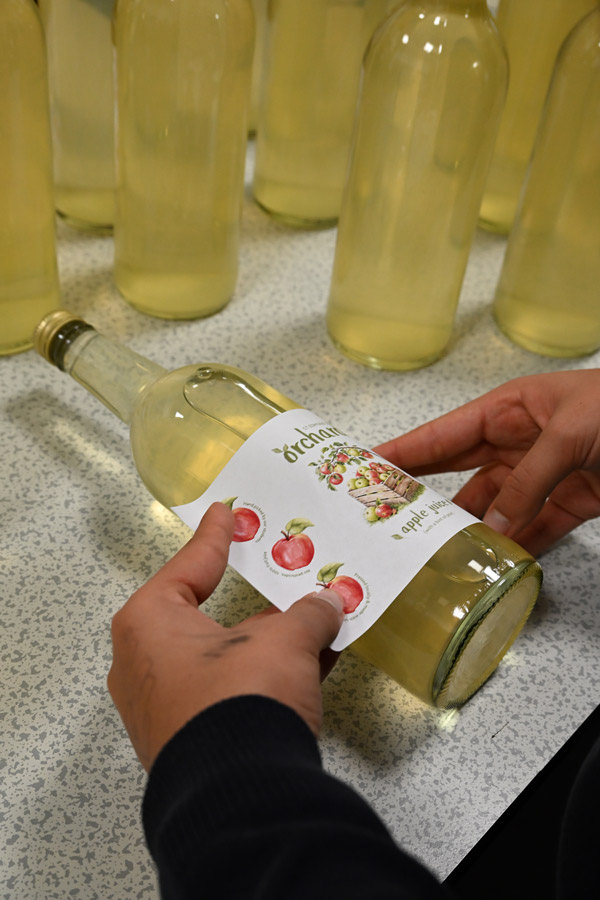
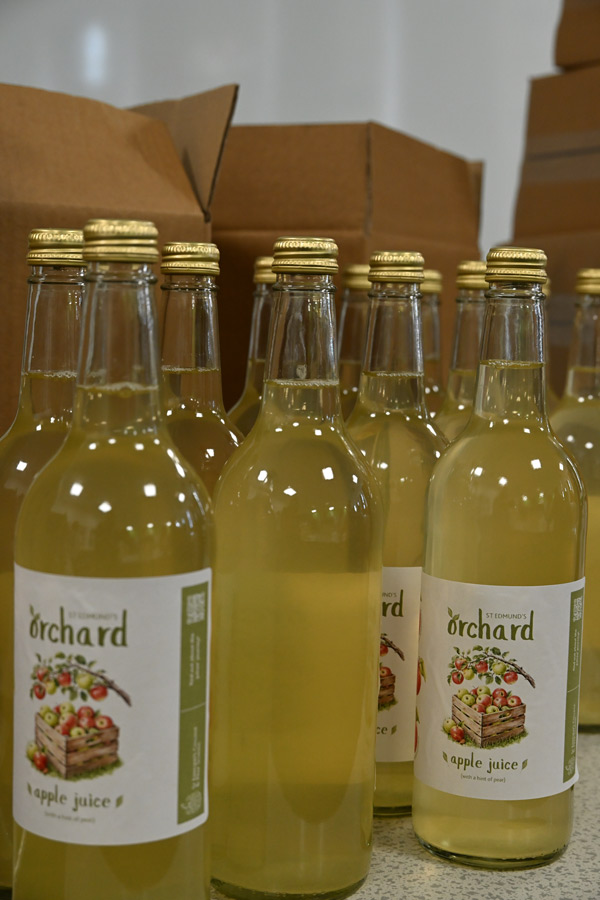
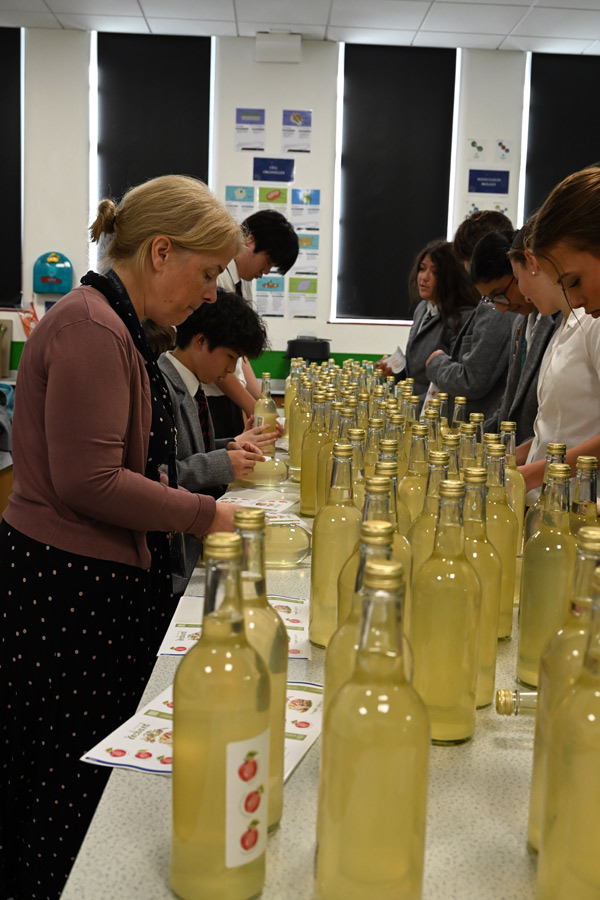
We are incredibly fortunate to have such beautiful grounds and to be able to continue making use of the fruits they produce. Each bottle of St Edmund’s apple juice is therefore much more than a refreshing drink. It is a little piece of our landscape, our history and a tradition that continues to grow year after year.
Our Land, Our Heritage
The College land is formed from various farms, the earliest of which were purchased in the late 1700s. The merging of these farms meant that the College could be largely self-sufficient for its food. Livestock included cattle, pigs, sheep and chickens. There were greenhouses to grow tomatoes, apple orchards, and most vegetables were grown on site. The College’s fires were fuelled by timber from trees on the College land.
This situation gradually changed after the Second World War but up until as late as the 1960s there was still a considerable amount of self-sufficiency as far as vegetables were concerned.
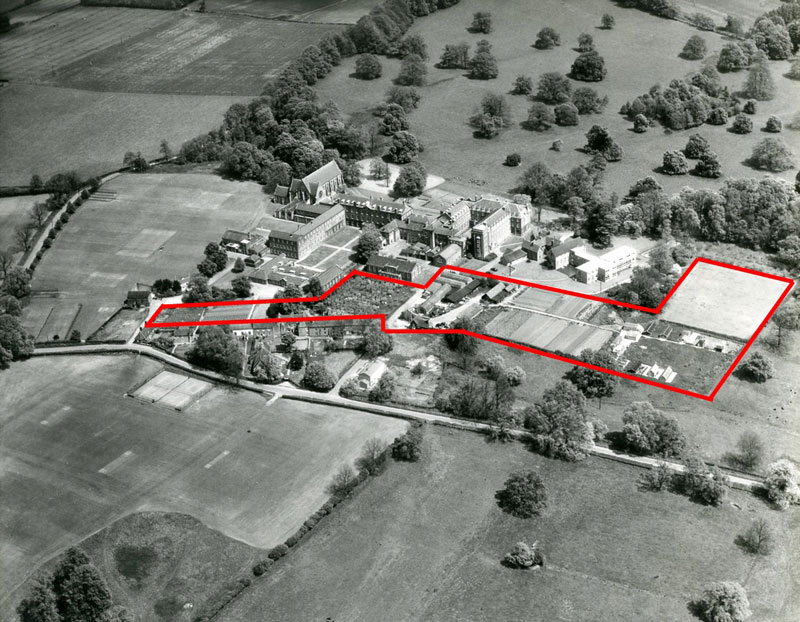
The attached aerial photograph of the rear of the College buildings taken in about 1965 shows the area still then devoted to agriculture outlined in red.
The orchard adjacent to the Douay Hall once covered the whole field and was planted after 1922. The Douay Hall was built over part of the orchard. Nowadays only a few apple trees remain around the perimeter. There was a farmyard which was demolished in 1978/79 when the Butler Hall was built. More vegetables were grown where the coach park now is, and then south of that were pig sties and hen houses.
So the picking of apples is the last vestige of the agricultural heritage of the College.